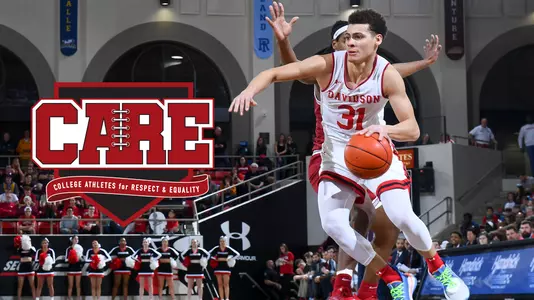
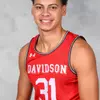
Photo by: DavidsonPhotos.com
FRIDAY FEATURES: Grady Handles with CARE
9/18/2020 12:00:00 PM | Men's Basketball
Kellan Grady has drawn the jeers of opposing fans for years.
It's just part of the deal when you're a star on the basketball court, a badge of honor for the game's best, and he knows he's going to hear all sorts of comments when he steps to any foul line away from Belk Arena.
Fans from Richmond, VCU, St. Bonaventure and across the Atlantic 10 want to provide any challenge they can for players like Grady, knowing that if he's comfortable and performs at his best, the Wildcats are tough to beat. Really tough.
But in one of the more encouraging displays of unity in 2020, fans of multiple A-10 rivals recently expressed their support of Grady on an issue that matters more than where Wildcats, Rams, Billikens or Bonnies land in league standings. They sent positive social media messages to Davidson's star guard after he took a stand for equality against vile attacks promoted by a traveling hate group that set up shop near campus one afternoon.
Grady wasn't necessarily surprised to receive encouragement from fans around the league — or from some opposing coaches as well — but it was reassuring to the senior from Boston nonetheless.
"It's evident that the majority of people believe in a common goal, which is a push for a more just world," says Grady. "It gives me more hope for the future to see support from those, who in all other circumstances would root against me and our team. It truly highlights the bigger picture — which is not basketball at the moment."
Grady was on campus on the afternoon of Aug. 27 when he received a text message from a teammate saying there was a demonstration in downtown Davidson. He was nearby, so he walked over to the intersection of Main Street and Concord Road, the primary crossroads hundreds of Wildcat fans pass through on winter nights to watch Wildcats like Grady shoot a basketball.
Grady couldn't believe his eyes or ears. About a dozen members of an out-of-state, mobile radical group were spewing racist and homophobic slurs toward people walking through town and those in a growing gathering of college and community members standing against them across the street. Their white supremacist hate message was being shared via megaphone and featured all the usual bleep-worthy words and phrases.
"I've never seen or heard anything remotely close to what I witnessed," Grady tweeted that night.
To those with the signs and a megaphone, Grady was not anyone special. He was not one of the top basketball players around, a blend of academic and athletic excellence. They didn't care that he's a kind, caring, intelligent, respectful young man. They didn't care that he's a good-looking, fashionable dresser with a bright smile that complements his smooth long-range shooting and driving abilities. They saw only one thing: he's black. And that was enough to make him a target.
Multiple times, they directed their hate at Grady, and eventually he ventured across the street to confront one of the leaders face-to-face. With each step, the words became clearer and clearer. Grady was hearing it all, but it was surreal, especially in an inclusive, picturesque town like Davidson.
"It was really eye-opening, and what made it so heartbreaking was that that kind of hatred and level of intolerance still exists," he says.
That the group did it all while trying to invoke scripture and God's name was additionally "mind-boggling" for Grady.
Eventually, the group piled into a white van plastered with large hate messages and went on its way, leaving those in the town to process, through disbelief, what had just happened.
Taking the step
Grady is not one to back down from a critical moment on or off the court, and in fact, he had already stepped forward in a leadership role this summer, before looking evil directly in the eye.
In June, Grady launched College Athletes for Respect and Equality (CARE), a social justice initiative in partnership with the Maimonides Institute for Medicine, Ethics and the Holocaust (MIMEH). Grady first connected with MIMEH in 2018 when the Wildcats traveled to Auschwitz and met Holocaust survivor Eva Mozes Kor.
"The trip to Auschwitz was moving on a lot of fronts for our whole team, and in a lot of ways it hit home for me," he says.
As time passed and Grady took a deeper look into the issues of society, he gained information and also anger. He knew he needed to channel it into something actionable but was unsure of just what that might be. Then the events of 2020, including the deaths of Ahmaud Arbery and George Floyd, pushed him to the limit. He had to do something.
"Fortunately, I have a platform to hopefully use not just with a concentration on basketball, but I'm looking to expand it in ways that can hopefully make our world a better place," he says.
Through CARE, Grady wants to unite college athletes for the greater good, raise awareness about systemic injustice and ultimately create change, both on the individual and legislative levels. He's been getting the word out, speaking with similarly inspired student-athletes across the country and laying the foundation to make a difference.
"I hope that a lot of people are interested, in my generation and the younger generation, that down the line, we won't have to experience this anymore," says Grady.
In his blood
Taking a stand against injustice is in Grady's DNA, and his push for social change continues a family legacy.
His grandparents were leaders in the anti-apartheid movement in South Africa. His grandmother, Sophia Theresa Williams De Bruyn, led a women's march of 20,000 in 1956, and Nelson Mandela taught her to drive. Grady's grandfather, Henry "Benny Nato" De Bruyn, was regional director of the African National Congress and was forced into exile for a number of years.
Like any young man growing up, Grady knew the basics of his family history. But as he's learned more and faced the same issues, it's all resonated more deeply.
"It felt even more like my calling once I understood what my family had gone through," he says.
Grady is also carving his own path.
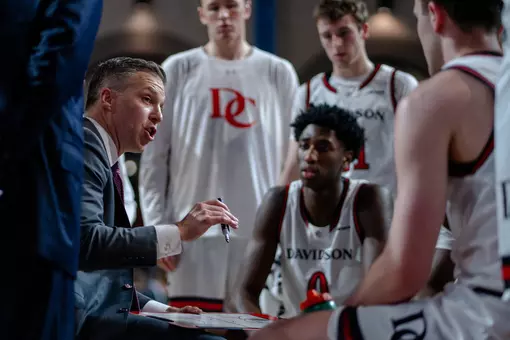
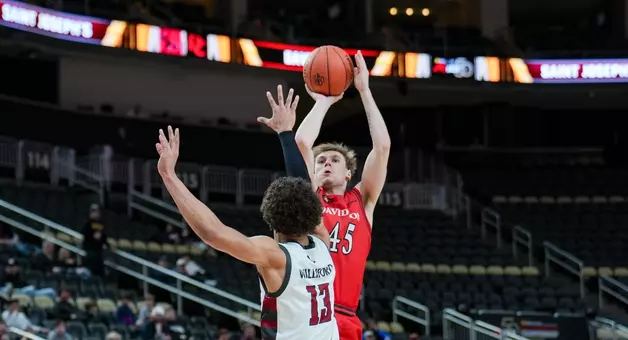
He's already 13th on Davidson's career scoring list with 1,626 points in three seasons, varying minimally from his 17.5 points per game average. The A-10 Rookie of the Year in 2017-18, he's a three-time All A-10 selection. And he's another in a line of coach Bob McKillop's players, who blend on-court skill with lofty academic and humanitarian pursuits.
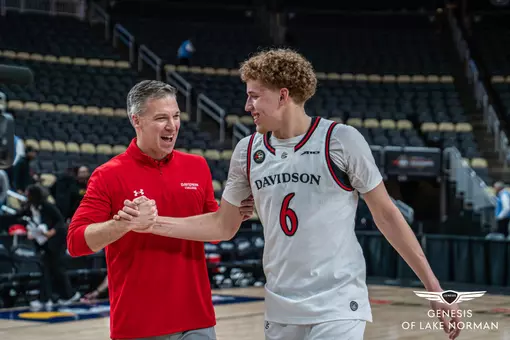
"Our guys try to represent the best of what life is all about, and they're in a position where, they're not trying to force an opinion upon anybody, but they're in a position where they can live their lives in a way to be models of excellence," says McKillop. "Kellan has taken a leadership role in that, and it's had an impact on his teammates, and I think it's had an impact on the Davidson College basketball community and on the Davidson community as a whole."
And, not to mention, plenty of non-Wildcats as well.
It's just part of the deal when you're a star on the basketball court, a badge of honor for the game's best, and he knows he's going to hear all sorts of comments when he steps to any foul line away from Belk Arena.
Fans from Richmond, VCU, St. Bonaventure and across the Atlantic 10 want to provide any challenge they can for players like Grady, knowing that if he's comfortable and performs at his best, the Wildcats are tough to beat. Really tough.
But in one of the more encouraging displays of unity in 2020, fans of multiple A-10 rivals recently expressed their support of Grady on an issue that matters more than where Wildcats, Rams, Billikens or Bonnies land in league standings. They sent positive social media messages to Davidson's star guard after he took a stand for equality against vile attacks promoted by a traveling hate group that set up shop near campus one afternoon.
Grady wasn't necessarily surprised to receive encouragement from fans around the league — or from some opposing coaches as well — but it was reassuring to the senior from Boston nonetheless.
"It's evident that the majority of people believe in a common goal, which is a push for a more just world," says Grady. "It gives me more hope for the future to see support from those, who in all other circumstances would root against me and our team. It truly highlights the bigger picture — which is not basketball at the moment."
Grady was on campus on the afternoon of Aug. 27 when he received a text message from a teammate saying there was a demonstration in downtown Davidson. He was nearby, so he walked over to the intersection of Main Street and Concord Road, the primary crossroads hundreds of Wildcat fans pass through on winter nights to watch Wildcats like Grady shoot a basketball.
Grady couldn't believe his eyes or ears. About a dozen members of an out-of-state, mobile radical group were spewing racist and homophobic slurs toward people walking through town and those in a growing gathering of college and community members standing against them across the street. Their white supremacist hate message was being shared via megaphone and featured all the usual bleep-worthy words and phrases.
"I've never seen or heard anything remotely close to what I witnessed," Grady tweeted that night.
To those with the signs and a megaphone, Grady was not anyone special. He was not one of the top basketball players around, a blend of academic and athletic excellence. They didn't care that he's a kind, caring, intelligent, respectful young man. They didn't care that he's a good-looking, fashionable dresser with a bright smile that complements his smooth long-range shooting and driving abilities. They saw only one thing: he's black. And that was enough to make him a target.
Multiple times, they directed their hate at Grady, and eventually he ventured across the street to confront one of the leaders face-to-face. With each step, the words became clearer and clearer. Grady was hearing it all, but it was surreal, especially in an inclusive, picturesque town like Davidson.
"It was really eye-opening, and what made it so heartbreaking was that that kind of hatred and level of intolerance still exists," he says.
That the group did it all while trying to invoke scripture and God's name was additionally "mind-boggling" for Grady.
Eventually, the group piled into a white van plastered with large hate messages and went on its way, leaving those in the town to process, through disbelief, what had just happened.
Taking the step
Grady is not one to back down from a critical moment on or off the court, and in fact, he had already stepped forward in a leadership role this summer, before looking evil directly in the eye.
In June, Grady launched College Athletes for Respect and Equality (CARE), a social justice initiative in partnership with the Maimonides Institute for Medicine, Ethics and the Holocaust (MIMEH). Grady first connected with MIMEH in 2018 when the Wildcats traveled to Auschwitz and met Holocaust survivor Eva Mozes Kor.
"The trip to Auschwitz was moving on a lot of fronts for our whole team, and in a lot of ways it hit home for me," he says.
As time passed and Grady took a deeper look into the issues of society, he gained information and also anger. He knew he needed to channel it into something actionable but was unsure of just what that might be. Then the events of 2020, including the deaths of Ahmaud Arbery and George Floyd, pushed him to the limit. He had to do something.
"Fortunately, I have a platform to hopefully use not just with a concentration on basketball, but I'm looking to expand it in ways that can hopefully make our world a better place," he says.
Through CARE, Grady wants to unite college athletes for the greater good, raise awareness about systemic injustice and ultimately create change, both on the individual and legislative levels. He's been getting the word out, speaking with similarly inspired student-athletes across the country and laying the foundation to make a difference.
"I hope that a lot of people are interested, in my generation and the younger generation, that down the line, we won't have to experience this anymore," says Grady.
In his blood
Taking a stand against injustice is in Grady's DNA, and his push for social change continues a family legacy.
His grandparents were leaders in the anti-apartheid movement in South Africa. His grandmother, Sophia Theresa Williams De Bruyn, led a women's march of 20,000 in 1956, and Nelson Mandela taught her to drive. Grady's grandfather, Henry "Benny Nato" De Bruyn, was regional director of the African National Congress and was forced into exile for a number of years.
Like any young man growing up, Grady knew the basics of his family history. But as he's learned more and faced the same issues, it's all resonated more deeply.
"It felt even more like my calling once I understood what my family had gone through," he says.
Grady is also carving his own path.
He's already 13th on Davidson's career scoring list with 1,626 points in three seasons, varying minimally from his 17.5 points per game average. The A-10 Rookie of the Year in 2017-18, he's a three-time All A-10 selection. And he's another in a line of coach Bob McKillop's players, who blend on-court skill with lofty academic and humanitarian pursuits.
"Our guys try to represent the best of what life is all about, and they're in a position where, they're not trying to force an opinion upon anybody, but they're in a position where they can live their lives in a way to be models of excellence," says McKillop. "Kellan has taken a leadership role in that, and it's had an impact on his teammates, and I think it's had an impact on the Davidson College basketball community and on the Davidson community as a whole."
And, not to mention, plenty of non-Wildcats as well.

Players Mentioned
G
/ Men's BasketballThe Inside Out Show (Season 2, Episode 6)
Friday, April 17
2025-26 Men's Basketball - Brock Matheny (Senior Spotlight)
Sunday, March 15
2025-26 Men's Basketball - Hunter Adam (Senior Spotight)
Sunday, March 15
2025-26 Men's Basketball - Sean Logan (Senior Spotlight)
Sunday, March 15